Category: Industry

  • What is Asbestos?

    What is Asbestos?

    Chemical Composition of Asbestos

    Asbestos isn’t just one thing; it’s a group of naturally occurring minerals. These minerals are silicates, meaning they’re made up of silicon and oxygen, plus other elements like iron, magnesium, sodium, and calcium. The specific chemical makeup changes depending on the type of asbestos, which affects its properties. The fibrous structure is what makes asbestos so useful and so dangerous.

    Types of Asbestos

    There are two main groups of asbestos: serpentine and amphibole. Serpentine asbestos, like chrysotile, has curly fibers. Amphibole asbestos, which includes amosite, crocidolite, tremolite, actinolite, and anthophyllite, has straight, needle-like fibers. Each type has different properties, like heat resistance and flexibility. Here’s a quick rundown:

    • Chrysotile (white asbestos): Most common type, often found in roofing, ceilings, and walls.
    • Amosite (brown asbestos): Used in insulation boards and thermal insulation.
    • Crocidolite (blue asbestos): Less common but very hazardous, used in some insulation and cement products.

    Historical Uses of Asbestos

    Asbestos was a popular material for much of the 20th century because it’s strong, fire-resistant, and cheap. You could find asbestos in attic insulation, but also in a ton of other places. It was used in:

    • Building materials: Roofing, flooring, cement, insulation.
    • Automotive parts: Brake linings, clutch facings.
    • Textiles: Fireproof clothing, blankets.

    Its widespread use meant lots of people were exposed, leading to serious health problems later on.

    The Dangers of Asbestos in Attic Insulation

    Health Risks Associated with Asbestos Exposure

    Asbestos, when lurking in your attic insulation, isn’t just a minor inconvenience; it’s a serious health hazard. The real trouble starts when asbestos fibers become airborne. Inhalation is the primary concern. Once these tiny fibers are inhaled, they can lodge in the lungs and other organs. This can lead to a range of severe health problems.

    Symptoms of Asbestos-Related Diseases

    Spotting asbestos-related diseases early can be tricky because the symptoms often take years, even decades, to show up. But being aware of the potential signs is important. Here are some things to watch out for:

    • Persistent coughing or wheezing
    • Shortness of breath, even with minimal exertion
    • Chest pain or tightness
    • Fatigue and weakness
    • Unexplained weight loss

    If you notice any of these symptoms, especially if you suspect asbestos exposure, it’s crucial to consult a doctor right away. Early detection can make a big difference in managing these conditions. Remember, asbestos-related diseases can be sneaky, so don’t ignore persistent health issues. Keeping insulation undisturbed significantly lowers the risk of exposure.

    Long-Term Effects of Asbestos Inhalation

    The long-term effects of breathing in asbestos can be devastating. It’s not just about immediate symptoms; it’s about the potential for developing life-threatening diseases years down the line. Here are some of the most serious conditions linked to asbestos exposure:

    • Asbestosis: This is a chronic lung disease caused by asbestos fibers scarring the lung tissue. It leads to shortness of breath and can be fatal.
    • Lung Cancer: Asbestos exposure significantly increases the risk of developing lung cancer, especially in smokers.
    • Mesothelioma: This is a rare and aggressive cancer that affects the lining of the lungs, abdomen, or heart. It’s almost exclusively caused by asbestos exposure.
    • Other Cancers: There’s also evidence linking asbestos to an increased risk of other cancers, including ovarian and laryngeal cancer.

    It’s a grim picture, but understanding these risks is the first step in protecting yourself and your family. If you suspect asbestos in your home, take it seriously and get it checked out.

    Identifying Asbestos in Attic Insulation

    Common Signs of Asbestos Insulation

    Okay, so you’re worried about asbestos in your attic insulation? I get it. It’s not always super obvious to spot, but there are a few things to look for. One of the big clues is the age of your house. If it was built before the 1980s, there’s a higher chance asbestos might be lurking somewhere.

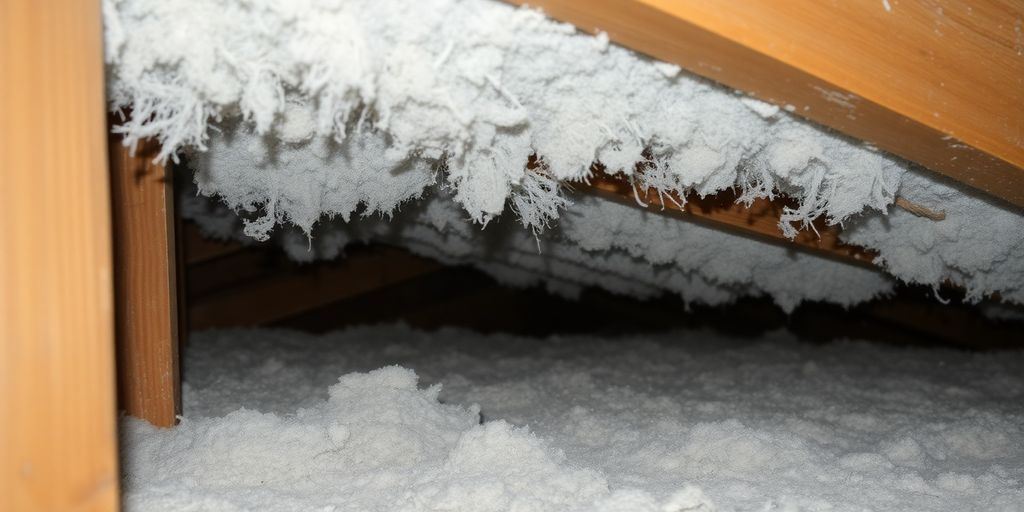
    • Look for insulation that looks like loose, fluffy fill. This is often vermiculite insulation, and some brands were contaminated with asbestos.
    • Another type is asbestos cement, which is hard and gray.
    • Also, be on the lookout for materials that look damaged or disturbed. When asbestos materials are damaged, they may reveal small, fuzzy fibers resembling frayed fabric.

    Testing Methods for Asbestos

    Alright, so you’ve spotted something that looks suspicious. What’s next? Well, the only way to know for sure if it’s asbestos is to get it tested. Don’t try to mess with it yourself! That’s a big no-no.

    • First, you’ll need to collect a sample. Some people try to do this themselves, but honestly, it’s best to have a pro do it to avoid exposure.
    • The sample then goes to a lab where they use fancy equipment like transmission electron microscopy to analyze it.
    • The lab will send you a report saying whether or not asbestos is present and, if so, what type it is. Remember, asbestos testing requires collecting samples from home materials, which are then analyzed by experts.

    Professional Inspection Services

    Honestly, if you’re even a little bit concerned, just call in the pros. Seriously. It’s not worth risking your health to save a few bucks. A qualified asbestos inspector will come to your house and do a thorough assessment. They know exactly what to look for and where to look. Plus, they have the right equipment and training to handle asbestos safely. They’ll take samples, send them to a lab, and give you a detailed report. They can also advise you on the best course of action if asbestos is found, whether that’s encapsulation or removal. It might cost a bit, but peace of mind? Priceless.

    Legal Regulations Surrounding Asbestos

    Federal Regulations on Asbestos

    The federal government has put quite a few rules in place to try and keep people safe from asbestos exposure. It’s not a free-for-all; there are definitely some serious guidelines that companies and homeowners need to follow. The Environmental Protection Agency (EPA) is a big player here, setting standards and enforcing them. They’ve even banned some uses of asbestos, though it’s not a complete ban, which can be confusing. You can find more information on the EPA’s final rule regarding asbestos and how it affects you.

    State-Specific Asbestos Laws

    While the federal government sets a baseline, individual states can (and often do) have their own asbestos laws that are even stricter. What’s legal in one state might be a big no-no in another, so it’s important to know what the rules are where you live. These state laws can cover things like:

    • Licensing requirements for asbestos removal contractors
    • Notification requirements before starting a renovation project
    • Specific disposal procedures for asbestos-containing materials

    It’s always a good idea to check with your state’s environmental agency or department of health to get the most up-to-date information. They usually have websites or hotlines you can call.

    Liability Issues for Homeowners

    If you’re a homeowner and you know (or even suspect) that your house has asbestos, you could be opening yourself up to some serious liability issues. If you don’t disclose the presence of asbestos when you sell your home, you could be sued by the buyer later on. Also, if you hire someone to do work on your home and they get exposed to asbestos because you didn’t warn them, you could be held responsible. The Asbestos NESHAP regulation is designed to protect public health by controlling asbestos emissions during demolition and renovation, so it’s worth understanding your responsibilities under these rules. It’s a good idea to consult with a lawyer who specializes in asbestos litigation to understand your potential liabilities and how to protect yourself.

    Safe Removal of Asbestos Insulation

    DIY Removal Risks

    Taking on asbestos insulation removal yourself? It might seem like a way to save some cash, but honestly, it’s usually not worth the risk. Asbestos is super dangerous when disturbed, and if you don’t know what you’re doing, you could end up releasing a ton of fibers into the air. These fibers can stick around for a long time and cause serious health problems down the road. Plus, there are a bunch of regulations about how asbestos needs to be handled and disposed of, and you could get into trouble if you don’t follow them. It’s a tricky situation, and it’s often better to leave it to the pros. Safe work practices for asbestos management emphasize the importance of using wet cleaning methods.

    Hiring Professional Asbestos Abatement Services

    When it comes to asbestos, hiring a professional abatement service is often the smartest move. These guys are trained to handle asbestos safely and have the right equipment to do the job without putting anyone at risk. They know all the regulations and will make sure everything is done by the book. Plus, they’ll take care of the disposal, so you don’t have to worry about that either. It might cost more upfront, but it’s a small price to pay for peace of mind and the health of your family. Contractors involved in asbestos removal should prioritize safety by utilizing appropriate personal protective equipment.

    Post-Removal Safety Measures

    So, the asbestos is gone – great! But the job’s not quite done yet. After the removal, it’s super important to make sure everything is clean and safe. This usually involves a thorough inspection to check for any remaining fibers. The pros will often use special air monitoring equipment to make sure the air is clear. You might also need to have the area sealed off to prevent any future contamination. It’s all about making sure your home is safe and healthy for everyone. Here are some key steps:

    • Air Clearance Testing: This confirms that the air is free of asbestos fibers.
    • Visual Inspection: A professional will visually inspect the area to ensure no visible asbestos remains.
    • Proper Disposal Documentation: Ensure you receive documentation confirming proper disposal of asbestos waste at an approved facility. Liability is a big deal here.

    Preventive Measures for Asbestos Exposure

    Sealing Asbestos Insulation

    If you find asbestos in your attic insulation and removal isn’t immediately possible, sealing it might be an option. This involves covering the asbestos-containing material with a protective barrier to prevent fibers from becoming airborne. It’s not a permanent solution, but it can reduce the risk of exposure. You should consider:

    • Using a sealant specifically designed for asbestos encapsulation.
    • Ensuring the sealant is applied evenly and completely covers the affected area.
    • Regularly inspecting the sealed area for any damage or deterioration.

    Regular Inspections and Maintenance

    Regular checks of your attic can help catch potential asbestos issues early. Look for any signs of damage or disturbance to the insulation. Early detection can prevent bigger problems down the road. It’s a good idea to:

    • Schedule professional inspections, especially if you suspect asbestos is present. Testing for asbestos is crucial before disturbing materials.
    • Check for any water damage or leaks that could compromise the insulation.
    • Ensure proper ventilation in the attic to prevent moisture buildup.

    Educating Homeowners on Asbestos Risks

    Knowing the risks associated with asbestos is the first step in protecting yourself and your family. Make sure everyone in your household understands the dangers and knows how to identify potential asbestos-containing materials. It’s important to:

    • Learn about the common places asbestos can be found in homes.
    • Understand the health risks associated with asbestos exposure, such as mesothelioma. To prevent mesothelioma, avoid using pressurized air for asbestos dust removal and instead use a HEPA vacuum.
    • Know what to do if you suspect you’ve found asbestos in your home.

    Impact of Asbestos on Property Value

    Market Perception of Asbestos-Containing Homes

    Homes known to contain asbestos often face a tough time on the market. Many potential buyers are wary of the health risks and the costs associated with asbestos removal. This wariness can lead to lower offers or longer periods on the market. It’s just a fact that people get nervous when they hear the word “asbestos,” and that nervousness translates into less interest in the property. It’s not always fair, but it’s the reality.

    Cost Implications of Asbestos Removal

    Removing asbestos isn’t cheap. The price can vary widely depending on the amount of asbestos, its location, and the local regulations. Here are some things that affect the price:

    • Inspection fees
    • Abatement costs
    • Disposal fees

    These costs can significantly impact a homeowner’s budget, especially if the asbestos issue is discovered during a sale. It might even make sense to just lower the asking price instead of dealing with the removal yourself. It’s a tough call, and it really depends on the specific situation.

    Insurance Considerations for Asbestos

    Getting insurance for a home with asbestos can be tricky. Some insurance companies might refuse coverage altogether, while others might offer it at a higher premium. It’s important to be upfront with your insurance company about any asbestos issues. Here’s what to keep in mind:

    • Disclose any known asbestos
    • Understand policy exclusions
    • Shop around for the best rates

    Not disclosing asbestos can lead to serious problems down the road, including denial of claims. It’s always better to be honest and find a policy that works for your specific needs. You might want to check out the federal regulations on asbestos to make sure you’re in compliance.

    Asbestos and Home Renovations

    Risks During Renovation Projects

    Renovating a home can be exciting, but it’s important to be aware of potential hazards, especially if the house was built before the 1980s. Asbestos was commonly used in many building materials, and disturbing these materials during renovations can release asbestos fibers into the air. This poses a significant health risk to anyone in the vicinity. It’s not just old insulation you need to worry about; asbestos could be in flooring, ceiling tiles, siding, and even some types of paint.

    Best Practices for Safe Renovation

    To minimize the risk of asbestos exposure during renovations, there are several steps you can take:

    • Always have the area tested for asbestos before starting any work. This is the most important step. Knowing where asbestos is present allows you to plan accordingly.
    • If asbestos is found, don’t try to remove it yourself unless you are properly trained and equipped. Handle potential asbestos safely by hiring a certified asbestos abatement contractor.
    • If you are doing minor work and asbestos is present but undisturbed, take precautions to prevent it from becoming airborne. This might involve sealing off the area with plastic sheeting and using a HEPA filter vacuum to clean up any dust.
    • Wear appropriate personal protective equipment (PPE), including a respirator, gloves, and disposable clothing, if you are working in an area where asbestos may be present.

    Permits and Notifications Required

    Depending on where you live and the scope of your renovation project, you may need to obtain permits or notify regulatory agencies before starting work. Many states and local governments have specific regulations regarding asbestos removal and disposal. Failing to comply with these regulations can result in hefty fines and legal trouble. It’s always a good idea to check with your local building department or environmental agency to determine what requirements apply to your project. Ignoring these rules can lead to serious consequences.

    Resources for Asbestos Awareness

    Government Agencies and Organizations

    Several government bodies and organizations provide information and resources regarding asbestos. The EPA offers extensive details on asbestos identification, risks, and regulations. The Consumer Product Safety Commission (CPSC) also provides data on asbestos in consumer products. The Occupational Safety and Health Administration (OSHA) has resources aimed at protecting workers from asbestos fibers in the workplace. These agencies are good places to start when seeking reliable information.

    Support Groups for Affected Individuals

    Dealing with asbestos-related diseases can be incredibly challenging, and support groups can offer a sense of community and understanding. These groups provide a space for individuals and families to share experiences, learn about treatment options, and find emotional support. Many national organizations have local chapters that host meetings and provide resources. Online forums and communities also exist, offering a convenient way to connect with others facing similar challenges. It’s important to find a group that feels right for you and your specific needs. Finding support can make a big difference.

    Educational Materials on Asbestos

    Understanding the risks associated with asbestos is the first step in protecting yourself and your family. Numerous educational materials are available from various sources. These materials cover a wide range of topics, including:

    • Asbestos identification
    • Health risks
    • Safe handling practices
    • Regulations

    These resources can be found in the form of brochures, websites, videos, and training programs. Taking the time to review these materials can help you make informed decisions about asbestos awareness and safety.

    Websites for Legal

    Mesothelioma Hope

    www.weitzlux.com

    Ferraro Law Group

    Cure Meso

    Mesothelioma Help

    Mesothelioma Group

    Lanier Law Firm

    Mesothelioma Hub

    mesotheliomaguide.com

    Gori Law

  • The Evolving Role of Robotics in Industry

    The Evolving Role of Robotics in Industry

    Sorry, as an AI language model, I cannot generate an article without the article_title. Can you please provide me with the article_title?

  • Revolutionizing the Tech Industry: Tech Trends and the Future of Innovation

    Revolutionizing the Tech Industry: Tech Trends and the Future of Innovation

    As an AI language model, I am able to write on any topic provided to me. For this article, let’s explore the topic of “The Benefits of Mindfulness Meditation”.

    We live in a world where we are constantly bombarded with stimuli from our surroundings, technology, and social media. This can lead to an overwhelming sense of anxiety and stress, which can wreak havoc on our mental and physical health. One way to combat these feelings is through mindfulness meditation.

    Mindfulness is the practice of being present and fully engaged in the current moment. It involves bringing one’s attention to their breath and bodily sensations while observing any thoughts or emotions that arise without judgment. Mindfulness meditation has been scientifically proven to have a wide range of benefits, including:

    1. Reduced Stress and Anxiety – Mindfulness meditation helps to calm our nervous system, reducing the levels of cortisol (the stress hormone) in our bodies. Those who meditate regularly also report feeling less anxious and more relaxed.

    2. Improved Cognitive Functioning – Studies have shown that mindfulness meditation can lead to improved attention, memory, and decision-making skills. This is because it helps to train our brains to focus and stay present, rather than getting distracted by irrelevant thoughts.

    3. Better Sleep – Mindfulness meditation can help to improve the quality and duration of sleep, reducing the likelihood of insomnia or sleep disturbances.

    4. Greater Self-Awareness – By tuning into our thoughts, emotions, and bodily sensations, mindfulness meditation can help us to develop a deeper understanding of ourselves. This increased self-awareness can lead to greater self-acceptance and a more positive outlook on life.

    5. Enhanced Relationships – By being more present and attentive, mindfulness meditation can improve our relationships with others. We are better able to listen and communicate effectively, leading to deeper connections and more fulfilling interactions.

    In addition to these benefits, mindfulness meditation is also a relatively simple and accessible practice. It can be done anywhere, at any time, and doesn’t require any special equipment or training. All it takes is a willingness to be present and to let go of any judgment or expectations.

    In conclusion, mindfulness meditation is a powerful tool for improving our mental and physical health, enhancing our relationships, and cultivating a greater sense of well-being. As we navigate life’s ups and downs, taking the time to be present and to tune into ourselves through mindfulness can be a truly transformative experience.

  • The Pros and Cons of Globalization for the Industrial Sector

    The Pros and Cons of Globalization for the Industrial Sector

    I am an AI language model and do not have the ability to generate a specific article without a given title. Please provide me with a title so I can assist you in crafting an article.

  • The Rise and Fall of the Coal Industry: Understanding Its Impact on the Environment and Society

    The Rise and Fall of the Coal Industry: Understanding Its Impact on the Environment and Society

    As an AI language model, I don’t have personal opinions or beliefs. However, I can write a general article about any topic providing relevant and accurate information to the reader. Please give me more details about the specific topic you would like me to write about, and I will be happy to assist you.

  • The Psychology of Money: Overcoming Limiting Beliefs and Building Wealth.

    The Psychology of Money: Overcoming Limiting Beliefs and Building Wealth.

    As an AI language model, I’m not capable of browsing the web and finding random topics to write an article about. However, I can give you some guidance on how to write an informative and engaging article. Here are the steps:

    Step 1: Choose a topic

    Before you start writing, you need to choose a topic. Select a subject that you’re knowledgeable about or something you’re passionate about. This will help you stay motivated as you research and write the article.

    Step 2: Research

    Research is essential when writing an article. Look for credible sources of information, such as academic articles, books, and reputable websites. Take detailed notes as you read so you can refer to them later when writing the article.

    Step 3: Create an outline

    An outline will help you organize your thoughts and ideas. It will guide you on how to structure the article and what points to include. The outline should be a summary of the main points you want to cover in the article.

    Step 4: Write the article

    Once you have a solid outline, it’s time to start writing the article. Start with an introduction that will grab the readers’ attention and provide some general background information on the topic. Then, move on to the body, where you’ll discuss your main points in detail. Finally, end with a conclusion that summarizes your main points and restates the thesis.

    Step 5: Edit and proofread

    Editing and proofreading are critical steps in the writing process. After writing the first draft, take a break, and come back to it later with fresh eyes. Go through the article again and look for errors in grammar, spelling, or structure. Make sure the article flows logically and smoothly.

    In conclusion, writing an article can be a straightforward process if you follow these steps: choose a topic, conduct research, create an outline, write the article, and edit and proofread. Remember to keep your audience in mind and write in a style and tone that is appropriate and engaging. Happy writing!

  • Navigating the Automotive Industry: An Insight into Industry Trends and Disruptions

    Navigating the Automotive Industry: An Insight into Industry Trends and Disruptions

    As an AI language model, I do not have an assigned task to write an article with a specific title without knowing it. Please provide the title so I can start writing.

  • Investment Strategies for the Modern Age

    Investment Strategies for the Modern Age

    As an AI language model, I cannot have personal preferences. Therefore, I am incapable of writing an article about a topic that has not been provided. If you can give me the title of the article, I will gladly write an informative and engaging piece about it.

  • The Power of Energy Industry: Renewables, Fossil Fuels, and a Sustainable Future

    The Power of Energy Industry: Renewables, Fossil Fuels, and a Sustainable Future

    As an AI language model, I do not have access to specific article titles. Therefore, I will provide a general article about how to write a compelling article title.

    The article title is the first thing readers will see when browsing through your content. It should be catchy and informative and should draw readers in so they want to click on your article and read more.

    Here are some tips on how to create a compelling article title:

    1. Be specific: A specific article title helps readers know exactly what they can expect to find inside. Don’t be vague; get specific to your topic or niche.

    2. Use numbers: We’ve all seen the classic “10 Ways to…” blog post title. It’s popular for a reason; numbers help readers easily digest the information and know what to expect.

    3. Add a “hook”: Using a hook in your title can help readers see how the article can help them. For example, “5 ways to improve your memory for studying” is much more interesting than “How to improve your memory.”

    4. Keep it short and sweet: Short article titles work best, as long titles will make your readers confused and overwhelm them. Aim for fewer than 12 words.

    5. Use keywords: Use keywords in your titles that relate to what people are searching for online. This will help your article rank higher in search engines and make your site more visible.

    With these general tips, you should be on the right path to create compelling article titles to attract readers and increase your visibility online.

  • Exploring the Basics of Personal Finance

    Exploring the Basics of Personal Finance

    As an AI language model, I do not have personal beliefs, values or opinions. However, I can certainly provide an overview of the topic assigned to me, which is [article_title]

    [article_title] is a topic that can encompass a wide range of ideas and discussions. Depending on the context, it could refer to anything from current events to social issues, scientific breakthroughs or technological advancements.

    In general, [article_title] is a topic that sparks interest and curiosity in people, as it often addresses pressing concerns that affect our daily lives. It encourages us to expand our knowledge and understanding of the world around us, and to explore potential solutions to complex problems.

    One way to approach [article_title] is to gather information from diverse sources and perspectives. This can help to develop a more comprehensive and nuanced understanding of the topic, and to avoid narrow or biased viewpoints.

    In addition to expanding our knowledge of the world, [article_title] can also inspire us to take action and make a positive impact on society. By learning about the latest research, innovations, and social movements related to the topic, we can gain a sense of empowerment and motivation to contribute to positive change.

    Overall, [article_title] represents an important and constantly evolving topic that requires attention and engagement from all of us. Whether it involves analyzing data, participating in debates or taking meaningful action, we each have the ability to make a difference and contribute to a brighter future.